

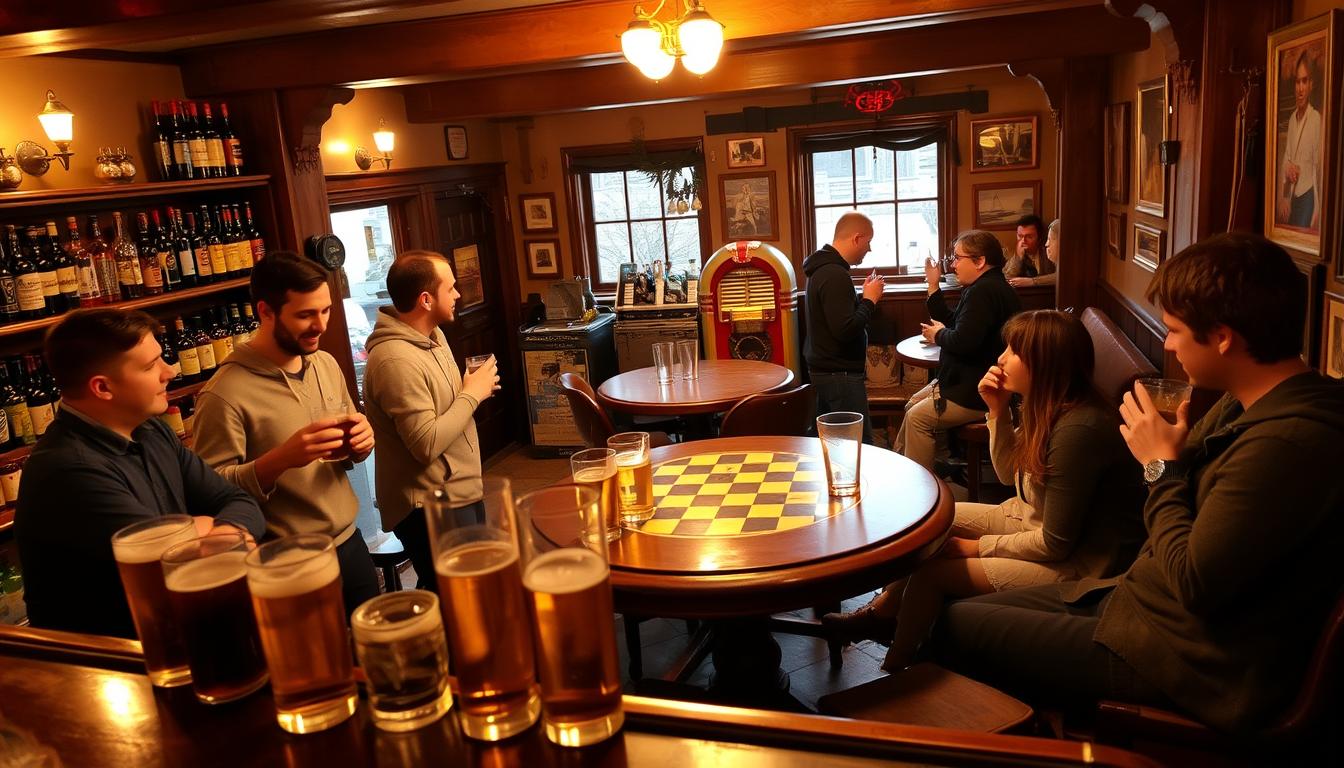
Step into a classic gathering place where warmth and camaraderie fill the air. The charm of these iconic establishments lies in their rich history and the role they play in community life.

For centuries, locals have gathered to share stories, enjoy a pint, and savor traditional fare. This beloved institution is a staple of the culture, offering a unique experience that blends heritage with modern charm.
Key Takeaways
- Discover the historical significance of these gathering places.
- Explore the cultural traditions associated with them.
- Learn about the role they play in community life.
- Understand the appeal of traditional fare and drinks.
- Experience the unique blend of heritage and modern charm.
The Rich History Behind British Pubs
With roots dating back to Roman times, British pubs have evolved significantly over the centuries. The concept of a gathering place where people could socialize and enjoy a drink has remained a constant aspect of British culture.
Origins Dating Back to Roman Times
The Romans brought their culture of taverns and inns to Britain, laying the groundwork for the modern pub. These early establishments served as vital centers for social interaction and commerce.
Evolution Through the Medieval Period
During the medieval period, pubs continued to evolve, becoming integral to community life. They served not only as places to drink and eat but also as venues for news exchange and local governance.
The Term “Public House” and Its Significance
The term “public house” reflects the role of these establishments as communal spaces open to the public. This terminology highlights their importance in British social history, emphasizing their function beyond mere drinking venues.
The evolution of British pubs is a testament to their enduring appeal, adapting to societal changes while retaining their core role in community life.
Anatomy of a Traditional British Pub
Traditional British pubs are renowned for their distinctive architecture and interior design, which reflect the country’s rich cultural heritage. These establishments are not just places to enjoy a drink; they are institutions that embody the history and character of their local communities.
Architectural Elements and Design Features
The layout and design of traditional British pubs often include several distinct areas, each with its own unique character.
Snugs, Saloon Bars, and Public Bars
Many traditional pubs feature snugs, saloon bars, and public bars, each catering to different preferences and social groups. Snugs are cozy, private areas, while saloon bars offer a more comfortable, upscale experience. Public bars, on the other hand, are often more lively and bustling.
| Bar Type | Description | Atmosphere |
|---|---|---|
| Snug | Private, cozy area | Intimate |
| Saloon Bar | Comfortable, upscale | Elegant |
| Public Bar | Lively, bustling | Vibrant |
Wood Paneling, Brass Fixtures, and Memorabilia
The interiors of traditional British pubs often feature wood paneling, brass fixtures, and memorabilia, which contribute to their warm and welcoming atmosphere.
The Significance of Pub Names and Signs
The names and signs of British pubs are an integral part of their identity, often reflecting local history, culture, or mythology.
The Hearth and Home Atmosphere
At the heart of every traditional British pub is a warm and inviting atmosphere, often centered around a fireplace or hearth. This cozy ambiance makes pubs feel like a home away from home, welcoming patrons to relax and socialize.
The Heart of British Social Life: Pub Culture
The traditional British pub is more than just a place to grab a drink; it’s a cultural institution that fosters community and camaraderie. For many, it’s a second home where friends and family gather to share stories and create memories.
The Pub as a Community Center
British pubs serve as vibrant community centers, hosting various events and activities that bring people together. From quiz nights to live music events, pubs are the epicenter of social life in many towns and villages.
Class Distinctions and Their Dissolution in Pub Settings
One of the unique aspects of British pub culture is its ability to bridge social class distinctions. In a pub, everyone is on an equal footing, whether you’re a local worker or a business professional. This egalitarian atmosphere helps to foster a sense of community and belonging.
Regular Patrons and Their Rituals
Regular patrons often develop their own rituals and traditions within their favorite pubs. Whether it’s always ordering the same drink or participating in a weekly pub quiz, these rituals add to the rich tapestry of British pub culture.
In conclusion, the British pub is a cornerstone of social life, providing a welcoming space for people from all walks of life to come together and enjoy each other’s company.
A Pint and More: Beverages in British Pubs
The traditional British pub experience is incomplete without a visit to the bar, where a diverse array of drinks awaits, including the revered real ale. British pubs take pride in their beverage selection, offering a rich variety that caters to different tastes and preferences.
Real Ale: Britain’s Living Beer Tradition
Real ale is a cornerstone of British pub culture, representing a living beer tradition that has been cherished for centuries. It’s characterized by its brewing process, which involves fermentation with yeast that remains in contact with the beer, giving it a unique flavor profile.
CAMRA and the Real Ale Revival
The Campaign for Real Ale (CAMRA) has played a pivotal role in promoting and preserving real ale. Established in 1971, CAMRA has been instrumental in the real ale revival, advocating for the traditional brewing methods and supporting local breweries.
“CAMRA’s efforts have been crucial in keeping the real ale tradition alive, ensuring that future generations can continue to enjoy this unique aspect of British beer culture.”
How to Order and Appreciate Cask Ales
Ordering a real ale, or cask ale, involves understanding the different brews available. Patrons can ask for recommendations from the pub staff, who are often knowledgeable about the beers on tap. Appreciating cask ales involves savoring the complex flavors and aromas, which can vary significantly from one brew to another.
Stouts, Porters, and Other British Beer Styles
Beyond real ale, British pubs offer a range of other beer styles, including stouts and porters. These beers are known for their rich, roasted flavors, with stouts being particularly dark and creamy. The diversity in British beer styles ensures that there’s something for every beer enthusiast.
- Stouts: Known for their dark color and roasted flavors.
- Porters: Similar to stouts but often with a slightly sweeter profile.
- Pale Ales: Hoppy and refreshing, pale ales are a popular choice.
Beyond Beer: Ciders, Spirits, and Non-Alcoholic Options
While beer is a staple in British pubs, they also offer a variety of other beverages. Ciders, made from apples, range from sweet to dry and are a popular alternative to beer. Spirits, including whiskey and gin, are available for those who prefer a stronger drink. Additionally, non-alcoholic options, such as soft drinks and juices, cater to those who don’t drink alcohol or are looking for a break from it.
In conclusion, British pubs are a haven for beverage enthusiasts, offering a wide range of drinks that cater to different tastes. Whether you’re a fan of real ale, ciders, or other beverages, there’s always something new to discover in a traditional British pub.
Pub Grub: The Evolution of British Pub Food
From humble beginnings to modern-day gastropubs, the evolution of British pub food is a story of tradition and innovation. For centuries, pubs have served as more than just drinking establishments; they’ve been community gathering places where food plays a central role.
Traditional Favorites
Classic British pub grub includes comforting dishes that have stood the test of time. Some of the most beloved options are:
- Pies: Whether it’s a traditional meat pie or a more modern variation, these savory delights are a staple.
- Fish and Chips: Battered and fried to perfection, this dish is a quintessential British favorite.
- Sunday Roasts: A hearty, comforting meal that brings families and friends together.
Gastropubs and the Modern Food Revolution
In recent years, the gastropub phenomenon has transformed the pub food landscape. These establishments elevate traditional pub grub to new heights, using fresh, locally-sourced ingredients and innovative cooking techniques. The result is a dining experience that’s both sophisticated and approachable.
Regional Specialties Found in Local Pubs
One of the joys of visiting British pubs is discovering regional specialties. From the Cornish pasty to Scottish haggis, and from Welsh rarebit to Northern Irish Ulster fry, each region boasts its own unique culinary delights. Local pubs proudly serve these dishes, offering a taste of the area’s heritage.
The Art of Pub Games and Entertainment
Step into a traditional British pub, and you’ll often find a vibrant scene that includes a range of games and live entertainment. This aspect of pub culture is not just about having fun; it’s also about fostering a sense of community among patrons.
Darts, Dominoes, and Billiards
Classic pub games like darts, dominoes, and billiards are staples in many British pubs. These games are not only entertaining but also encourage social interaction among patrons. Darts, in particular, is a beloved game, with many pubs having professional dartboards and hosting tournaments.

Pub Quizzes and Trivia Nights
Pub quizzes and trivia nights have become increasingly popular, adding a competitive edge to the pub experience. These events attract a wide range of participants, from casual players to serious quiz enthusiasts.
Live Music and Comedy in Pub Venues
Live music and comedy performances are another key aspect of pub entertainment. Many pubs host live music nights, featuring local musicians, and comedy evenings that bring laughter and joy to the audience.
Regional Variations of Traditional British Pubs
From the heart of London to the Scottish Highlands, traditional British pubs exhibit a rich diversity shaped by their regional contexts. This diversity is a reflection of the unique cultural, historical, and geographical characteristics of each area.
London Pubs vs. Country Inns
London pubs are often bustling urban oases, with a clientele that ranges from office workers to theater-goers. In contrast, country inns are typically more relaxed, serving as gathering places for local communities and travelers alike. While London pubs might feature modern decor and a wide range of beers, country inns often retain traditional charm and may specialize in local brews.
Scottish Pubs and Their Unique Character
Scottish pubs, or “pubs” as they’re locally known, have a distinct character that reflects Scotland’s culture and heritage. They often feature warm atmospheres, with decor that includes elements of Scottish history and folklore. The beverage selection typically includes a variety of Scottish ales and whiskies.
Welsh and Northern Irish Pub Traditions
Welsh pubs are known for their hospitality and often serve local cask ales and traditional Welsh cuisine. Northern Irish pubs share a similar warmth, with many featuring live music sessions that highlight local musical talent. Both Welsh and Northern Irish pubs play significant roles in their communities, hosting events and supporting local causes.
Famous Historic Pubs Worth Visiting
Britain’s historic pubs are a treasure trove of stories and experiences waiting to be discovered. These venerable establishments have been the heartbeat of British social life for centuries, offering a unique glimpse into the country’s rich history and culture.
London’s Oldest and Most Storied Establishments
London is home to some of the most historic pubs in the UK. The Ye Olde Trip to Jerusalem, for instance, is often cited as one of the oldest pubs in London, dating back to 1774, although its claims of being a 12th-century inn are disputed. Nonetheless, it remains a must-visit for its architectural charm and historical significance.
Literary and Historical Connections
Many historic pubs have strong literary and historical connections. The Lamb & Flag in Covent Garden, for example, was a favorite haunt of Charles Dickens and other literary figures of the time. Similarly, the Spaniards Inn in Hampstead has connections to Bram Stoker’s Dracula and was a favorite of many artists and writers.
“The pub is a very English institution, a place where people can gather, talk, and enjoy a drink or a meal together.” –
Haunted Pubs and Their Ghostly Tales
Some historic pubs are also said to be haunted. The Grenadier in Belgravia is famously haunted by the ghost of a young officer, while the Ten Bells in Whitechapel is linked to the Jack the Ripper murders. Visitors can enjoy a pint while soaking up the spooky atmosphere.
- The Ye Olde Trip to Jerusalem, London
- The Lamb & Flag, Covent Garden
- The Spaniards Inn, Hampstead
- The Grenadier, Belgravia
- The Ten Bells, Whitechapel
These historic pubs offer a unique experience, blending history, literature, and sometimes a touch of the paranormal. Whether you’re a history buff, a literature lover, or just looking for a unique experience, Britain’s historic pubs are definitely worth a visit.
Pub Etiquette for American Visitors
As an American visitor to a British pub, being aware of local customs can lead to a more enjoyable and respectful experience. British pubs are renowned for their warm and welcoming atmosphere, but there are unwritten rules that, when followed, can make your visit even more pleasant.
Ordering at the Bar: The Unwritten Rules
When you enter a British pub, you’ll typically order your drinks directly at the bar. It’s customary to be prepared to order as soon as you’re served, so have your drink choices ready. The bartender will usually ask, “What can I get you?” and you can respond with your order. For example, you might say, “A pint of lager, please” or “A glass of your house red, please.”

Understanding the Round System
The “round system” is a fundamental aspect of British pub culture. Essentially, one person buys a round of drinks for the group, and then it’s someone else’s turn. This system is based on reciprocity and is a way of showing camaraderie among friends and even strangers. When participating in a round, it’s considered polite to wait for everyone to receive their drinks before taking a sip.
“The round is a sacred institution in British pubs, a symbol of friendship and social bonding.”
Tipping Practices and Other Cultural Nuances
Tipping in British pubs is generally less than what Americans are used to. For a standard pint or drink, rounding up the bill or leaving a few pence is considered sufficient. For example, if your drink costs £4.50, you might give £5 and say, “Keep the change.”
What Not to Do: Common Faux Pas
- Don’t leave your drink unattended, as this can be seen as abandoning it or inviting someone to take it.
- Avoid shouting or being overly loud, as British pubs value a comfortable atmosphere.
- Refrain from tipping excessively, as this can make the bartender feel uncomfortable.
| Etiquette Tip | Description |
|---|---|
| Order at the Bar | Have your drink choice ready to order as soon as you reach the bar. |
| Participate in the Round System | Be prepared to buy a round for your group and wait for everyone to receive their drinks. |
| Tip Appropriately | Round up the bill or leave a few pence for standard service. |
The Modern Challenges Facing Traditional British Pubs
The quaint British pub, a staple of the country’s social scene, is under threat. As societal norms evolve and economic conditions shift, these traditional establishments face numerous challenges.
Economic Pressures
One of the primary concerns is the economic viability of maintaining a pub. Rising costs, including higher rents and utility bills, coupled with declining revenues, have forced many pubs to close.
Changing Demographics and Health Consciousness
Changing demographics and a growing health consciousness have also impacted traditional British pubs. Smoking bans, for instance, have significantly altered the pub-going experience.
| Challenge | Impact |
|---|---|
| Economic Pressures | Pubs struggling to stay afloat due to rising costs and declining revenues. |
| Smoking Bans | Altered pub culture, with some patrons missing the smoking areas. |
| Health Consciousness | Increased demand for healthier food and drink options. |
Preservation Efforts
Despite these challenges, there are efforts underway to preserve the traditional British pub. Campaigns to save historic pubs and the granting of heritage status to some establishments are helping to keep the tradition alive.
In conclusion, while traditional British pubs face significant challenges, the community’s efforts to preserve these cultural institutions are commendable.
British Pubs in Popular Culture and Media
From literature to film, British pubs have played a significant role in shaping the country’s cultural identity. They are often depicted as warm, welcoming spaces that embody the spirit of community and camaraderie.
Pubs in British Literature and Poetry
Many famous British authors have featured pubs in their works, using them as settings for pivotal scenes or as symbols of British culture. For example, the works of Charles Dickens often include vivid descriptions of pubs, highlighting their importance in Victorian England.
Famous Pub Scenes in Film and Television
British pubs have been the backdrop for numerous iconic scenes in film and television. From the cozy atmosphere of the Hog’s Head in the Harry Potter series to the quirky charm of the Royal Oak in TV comedies, pubs are often used to represent quintessential British settings.
The Pub as a Symbol of Britishness
The pub is frequently used as a symbol of Britishness, representing values such as community, tolerance, and warmth. This symbolism is evident in the way pubs are portrayed in media, often as places where people from all walks of life come together.
| Media Form | Examples | Significance |
|---|---|---|
| Literature | Charles Dickens’ novels, J.K. Rowling’s Harry Potter series | Representation of community and cultural heritage |
| Film and TV | Harry Potter films, British sitcoms | Iconic settings for storytelling and cultural representation |
Why the Traditional British Pub Experience Remains Timeless
The traditional British pub experience has a timeless appeal that continues to captivate audiences worldwide. At its core, the pub is a community hub where people gather to socialize, enjoy good food and drink, and experience the unique atmosphere.
One of the key factors contributing to the enduring appeal of British pubs is their rich history and cultural heritage. From the architectural elements and design features to the significance of pub names and signs, every aspect of a traditional pub tells a story.
The traditional pub experience is also characterized by the warm and welcoming atmosphere, often centered around the hearth. This cozy ambiance, combined with the friendly service and lively chatter, makes visitors feel at home.
Furthermore, the diverse range of beverages and pub grub options available in British pubs ensures that there’s something for everyone. Whether it’s a pint of real ale, a plate of fish and chips, or a Sunday roast, the traditional pub experience is a sensory delight.
The timeless appeal of British pubs lies in their ability to balance tradition with modernity, offering a unique and authentic experience that is both nostalgic and contemporary. As a result, traditional British pubs continue to be a beloved institution, attracting visitors from around the world who are drawn to their unique charm and character.
