

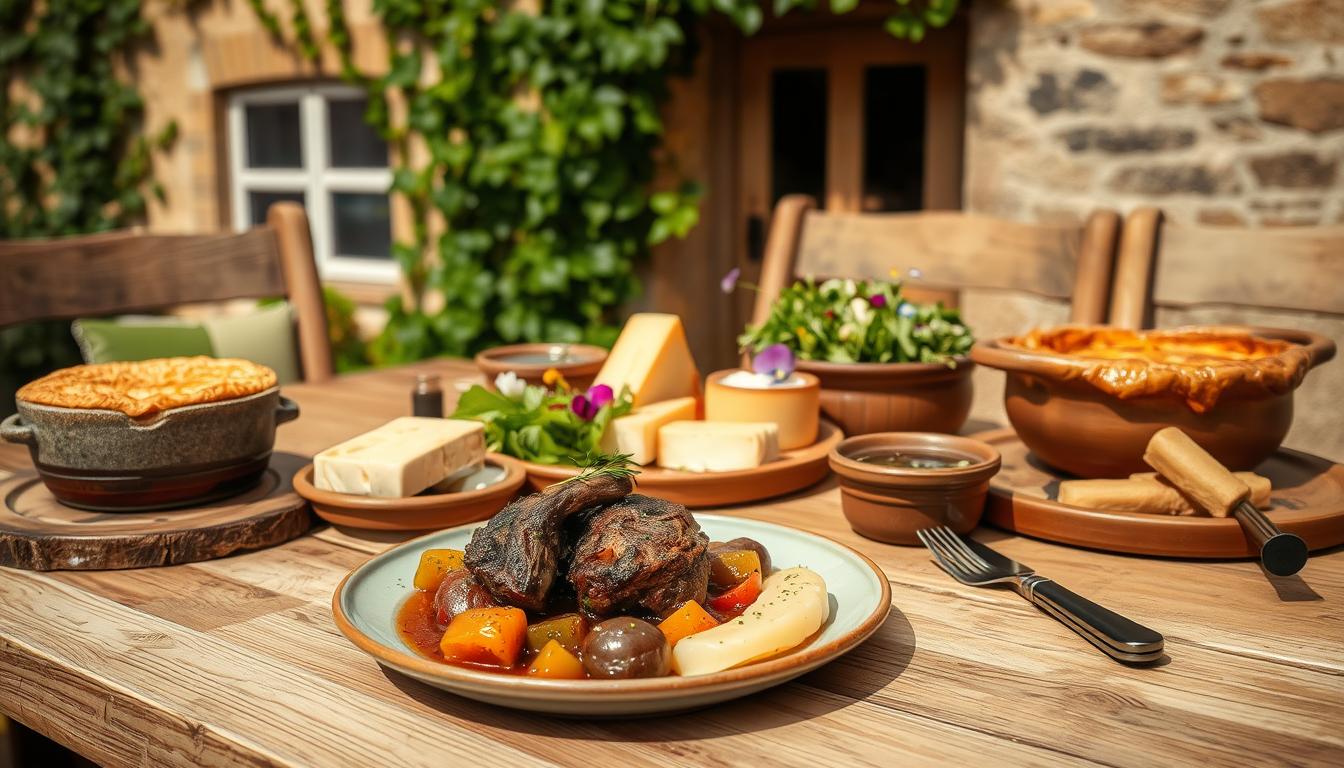
The Cotswolds, a picturesque region in England, is renowned for its rich culinary heritage. The area’s unique cuisine is characterized by its use of fresh, seasonal ingredients, often sourced from local farms and producers.
Visitors to the Cotswolds can indulge in a variety of delicious dishes, from traditional English breakfasts to artisanal cheeses and freshly baked bread. The region’s gastronomic delights are a reflection of its rolling hills, charming villages, and rich history.
Key Takeaways
- Experience the rich culinary heritage of the Cotswolds.
- Savor traditional English dishes made with fresh, seasonal ingredients.
- Explore local farms and producers for artisanal goods.
- Visit charming villages and enjoy the region’s gastronomic delights.
- Discover the unique flavors of Cotswolds cuisine.
The Culinary Landscape of the Cotswolds
The Cotswolds, a region renowned for its picturesque villages and rolling hills, boasts a rich culinary landscape that seamlessly blends traditional and modern flavors. This blend is evident in the way local chefs and producers balance heritage recipes with contemporary culinary innovations.
Traditional vs. Modern Food Culture
The Cotswolds’ food culture is a vibrant mix of traditional and modern elements. While classic dishes remain popular, there’s a growing trend towards innovative cuisine that incorporates local, seasonal ingredients.
- Traditional recipes often feature locally sourced meats and produce.
- Modern cuisine introduces new flavors and cooking techniques.
- The blend of old and new creates a unique dining experience.
Seasonal Influences on Local Cuisine
The changing seasons significantly influence the Cotswolds’ culinary offerings. Each time of year brings its own specialties and dishes.
Spring and Summer Offerings
During spring and summer, the Cotswolds’ cuisine is characterized by fresh, vibrant ingredients. Popular dishes include:
- Asparagus and lamb, showcasing the region’s spring produce.
- Fresh berries and stone fruits, perfect for desserts and preserves.
Autumn and Winter Specialties
As autumn and winter arrive, the focus shifts to heartier, comforting dishes. Highlights include:
- Game meats and root vegetables, ideal for warming stews and roasts.
- Traditional pies and baked goods, featuring local fruits and nuts.
The Cotswolds’ culinary landscape is thus a dynamic reflection of the region’s heritage and its adaptation to the seasons, offering a rich and varied gastronomic experience for visitors.
Local Food Cotswolds Specialties: Regional Highlights
The Cotswolds is renowned for its rich culinary heritage, boasting an array of local specialties that showcase the region’s gastronomic diversity. This diversity is reflected in the variety of meat, dairy, and sweet treats that are characteristic of the area.
Meat Specialties: Gloucester Old Spot vs. Cotswold Lamb
The Cotswolds is home to several iconic meat specialties, among which Gloucester Old Spot pork and Cotswold lamb stand out. Gloucester Old Spot, known for its succulent and flavorful meat, is a heritage breed pig that has been reared in the region for centuries. Cotswold lamb, on the other hand, is celebrated for its tender texture and rich flavor, often roasted to perfection.
A comparison between these two meat specialties reveals distinct characteristics. While Gloucester Old Spot is prized for its marbling and rich flavor, Cotswold lamb is noted for its leaner meat and subtle gaminess.
Dairy Delights: Single Gloucester vs. Double Gloucester Cheese
The Cotswolds is also famous for its dairy products, particularly Single Gloucester and Double Gloucester cheese. Single Gloucester, a softer and milder cheese, is made from the milk of Gloucester cows. Double Gloucester, with its richer and more robust flavor, is also produced from Gloucester cow’s milk but has a higher fat content, making it more popular among cheese enthusiasts.
| Cheese Type | Texture | Flavor Profile |
|---|---|---|
| Single Gloucester | Soft | Mild |
| Double Gloucester | Firmer | Rich, Robust |
Sweet Treats: Lardy Cake vs. Banbury Cakes
No visit to the Cotswolds would be complete without indulging in its sweet treats, such as Lardy Cake and Banbury Cakes. Lardy Cake, a traditional pastry, is known for its rich, buttery flavor and is often served with a cup of tea. Banbury Cakes, on the other hand, are sweet, flaky pastries filled with currants and often enjoyed as a snack.
The Cotswolds’ local food specialties offer a culinary journey through the region’s history and traditions. From the savory delights of Gloucester Old Spot and Cotswold lamb to the rich flavors of Single and Double Gloucester cheese, and the sweet pleasures of Lardy Cake and Banbury Cakes, there’s something to satisfy every palate.
Country Pubs vs. Fine Dining: Where to Eat
When it comes to eating out in the Cotswolds, visitors are spoiled for choice between charming country pubs and upscale fine dining venues. The region’s culinary landscape is dotted with an array of dining establishments, each offering unique experiences that cater to different tastes and preferences.
Top Gastropubs: Atmosphere and Menu Comparison
The Cotswolds is home to numerous gastropubs that have gained recognition for their warm atmosphere and innovative menus. These establishments often source their ingredients locally, ensuring that dishes are not only delicious but also reflective of the region’s produce. For instance, The Ebrington Arms in Ebrington is known for its seasonal menu and extensive selection of real ales.
In contrast, some gastropubs focus on a more contemporary dining experience, with modern decor and creative dishes. The King’s Head in Alderley is a prime example, offering a menu that changes regularly and features dishes made with locally sourced ingredients.
Fine Dining Establishments: Traditional vs. Contemporary
For those seeking a more luxurious dining experience, the Cotswolds boasts several fine dining establishments that offer exquisite cuisine. Traditional fine dining restaurants, such as The Luckington Manor, provide an elegant atmosphere and serve classic dishes with a focus on high-quality ingredients.
On the other hand, contemporary fine dining establishments in the Cotswolds are pushing the boundaries of culinary innovation. Restaurants like Hazelwood, near Tetbury, offer a modern take on traditional British cuisine, with a focus on seasonal ingredients and artistic presentation.
Value for Money: Budget-Friendly vs. Splurge-Worthy Options
When it comes to value for money, the Cotswolds offers a range of options to suit different budgets. Budget-friendly gastropubs like The Old Priory Inn near Stroud provide hearty meals at reasonable prices, making them ideal for casual dining.
For those willing to splurge, fine dining establishments like The Weston Estate’s dining room offer an unforgettable culinary experience, with menus crafted by renowned chefs and featuring the finest local ingredients.
Market Day Experiences: Comparing Local Food Markets
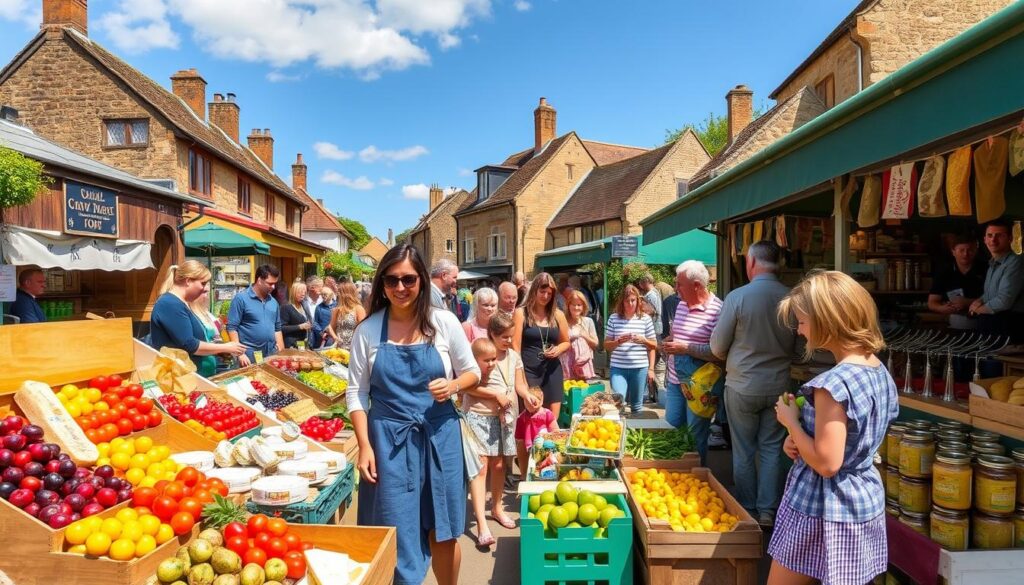
From Stroud to Cirencester, the Cotswolds’ food markets are a treasure trove of seasonal delights and local specialties. Visitors can immerse themselves in the region’s culinary culture by exploring these bustling markets.
Stroud Farmers’ Market vs. Cirencester Market
Stroud Farmers’ Market and Cirencester Market are two of the most popular destinations for food enthusiasts. While both offer a wide range of local produce, they each have their unique character. Stroud is known for its lively atmosphere, with a focus on organic and sustainable produce. Cirencester, on the other hand, boasts a broader selection of artisanal goods, including handmade cheeses and baked delights.
| Market Features | Stroud Farmers’ Market | Cirencester Market |
|---|---|---|
| Atmosphere | Lively, community-focused | Broad selection, artisanal focus |
| Produce | Organic, sustainable | Diverse, including artisanal goods |
| Specialties | Local meats, fresh produce | Handmade cheeses, baked goods |
Seasonal Food Festivals: Spring/Summer vs. Fall/Winter Events
The Cotswolds hosts various food festivals throughout the year, each celebrating the region’s seasonal produce. Spring and summer events often focus on fresh fruits and vegetables, while fall and winter festivals highlight hearty, comforting dishes made with locally sourced ingredients.
Artisan Products: Market Finds vs. Supermarket Alternatives
One of the joys of visiting Cotswolds’ markets is discovering unique, artisan products that are often superior to their supermarket counterparts. From handcrafted jams to artisanal cheeses, these products showcase the region’s rich culinary heritage.
The Tea Room Experience: Village vs. Town Settings
Tea rooms in the Cotswolds are a must-visit, blending tradition with modern charm. Whether nestled in a quaint village or situated in a bustling town, these tea rooms offer a unique experience that showcases the region’s hospitality.
Historic Tea Rooms: Comparing Ambiance and Offerings
Historic tea rooms in the Cotswolds are treasured for their ambiance and traditional offerings. In villages, tea rooms like the one at Hidcote Manor Garden offer a serene atmosphere amidst beautiful gardens. In contrast, town-based tea rooms, such as those in Cirencester, provide a more vibrant experience with a wider range of offerings.
“The Cotswolds is a place where tradition meets innovation, and its tea rooms are no exception.”
Traditional Cream Tea vs. Full Afternoon Tea Service
The Cotswolds is famous for its cream teas and afternoon tea services. Traditional cream tea typically includes scones with clotted cream and jam, accompanied by tea. Full afternoon tea, on the other hand, offers a more elaborate spread, including finger sandwiches, cakes, and pastries, in addition to scones and tea.
Scone Variations and Accompaniments
Scones are a staple in Cotswolds tea rooms. Variations include plain, fruit, or cheese scones, often served with clotted cream and homemade jam. Some tea rooms offer innovative accompaniments, such as flavored butters or artisanal preserves.
Tea Selection Comparisons
The selection of tea is another highlight of the Cotswolds tea room experience. From traditional English Breakfast to more exotic herbal teas, the variety is impressive. Some tea rooms also offer locally sourced teas, adding to the regional charm.
In conclusion, the tea room experience in the Cotswolds, whether in a village or town setting, is a delightful journey through tradition and innovation. With their rich ambiance, delicious offerings, and excellent tea selection, these tea rooms are a must-visit for anyone exploring the region.
Farm Shop Trail: Boutique vs. Large-Scale Operations
For those seeking an authentic taste of the Cotswolds, the farm shop trail offers an exciting journey through local produce and artisanal products. The region is home to a diverse range of farm shops, from boutique stores to large-scale operations, each offering a unique glimpse into the local food culture.
Daylesford Organic vs. Smaller Family-Run Shops
Daylesford Organic is a well-known destination on the Cotswolds’ farm shop trail, celebrated for its high-quality organic produce and beautifully presented displays. In contrast, smaller family-run shops, while less conspicuous, offer a personal and often more specialized selection of local goods. These smaller operations frequently develop strong relationships with local suppliers, ensuring a fresh and seasonal product range.
Local Produce Selection: Seasonal Availability Comparison
The selection of local produce varies significantly between boutique and large-scale farm shops, largely due to their differing approaches to sourcing. Larger operations like Daylesford Organic have the resources to source a wide range of products, often including exotic or out-of-season items. Smaller shops, however, tend to focus on what’s locally available and in season, offering a more authentic taste of the region’s culinary identity.
Artisanal Products: Traditional Methods vs. Modern Innovations
Artisanal products are a highlight of the Cotswolds’ farm shop trail, with both traditional methods and modern innovations on display. While larger shops may have the capacity to produce or source a wide variety of artisanal goods, smaller operations often excel in specific traditional crafts, such as cheese-making or baking. The blend of old and new techniques results in a rich tapestry of flavors and products that cater to diverse tastes.
The Cotswolds’ farm shop trail is a testament to the region’s commitment to local food and artisanal craftsmanship. Whether visiting a large-scale operation or a smaller family-run shop, visitors are sure to discover the authentic flavors of the Cotswolds.
Hands-On Food Experiences: Tours vs. Classes
From guided tours to cooking classes, the Cotswolds is a haven for food enthusiasts seeking hands-on experiences. Visitors can explore the region’s culinary delights through various interactive activities that showcase its rich gastronomic heritage.
Guided Food Tours: Walking vs. Driving Itineraries
Guided food tours in the Cotswolds offer a fantastic way to discover local specialties. While walking tours allow visitors to explore quaint villages and sample artisanal foods, driving itineraries provide the flexibility to cover larger areas and visit more remote producers.
Cooking Classes: Traditional Recipes vs. Contemporary Techniques
Cooking classes are another popular hands-on experience, where participants can learn to prepare traditional Cotswolds dishes or modern fusion cuisine. Classes often focus on seasonal ingredients and local specialties, providing a deeper understanding of the region’s culinary identity.
Specialty Experiences: Brewery Tours vs. Distillery Visits
For those interested in beverages, the Cotswolds is home to numerous breweries and distilleries offering tours and tastings. Brewery tours often highlight the craft of beer-making, while distillery visits provide insights into the production of fine spirits, such as gin and whiskey.
Whether it’s a guided tour, a cooking class, or a visit to a local brewery or distillery, the Cotswolds offers a diverse range of hands-on food experiences that cater to all interests and preferences.
Dining with a View: Countryside vs. Village Settings
The picturesque Cotswolds region is renowned for its exceptional dining experiences, set amidst breathtaking countryside and village landscapes. Visitors can choose from a variety of settings, each offering unique views and ambiance that enhance the overall dining experience.
Riverside Restaurants vs. Hilltop Venues
Riverside restaurants in the Cotswolds offer serene dining experiences, with the gentle flow of rivers such as the River Windrush or River Thames providing a soothing backdrop. In contrast, hilltop venues provide panoramic views of the rolling countryside, making them ideal for those seeking a more dramatic dining experience.
| Feature | Riverside Restaurants | Hilltop Venues |
|---|---|---|
| Ambiance | Serene, tranquil | Panoramic, dramatic |
| View | River views | Rolling countryside |
| Ideal For | Romantic dinners | Special occasions |
Historic Buildings vs. Modern Establishments
Dining in historic buildings, such as converted barns or old inns, adds a layer of charm and character to the experience. Modern establishments, on the other hand, offer contemporary cuisine and sleek designs, catering to those who prefer a more modern ambiance.
“Dining in the Cotswolds is not just about the food; it’s about the experience. Whether you’re in a historic cottage or a modern bistro, the atmosphere is always memorable.”
Seasonal Dining: Summer Alfresco vs. Winter Fireside Options
The Cotswolds offers seasonal dining experiences that cater to different preferences. Summer alfresco dining allows guests to enjoy their meals in the beautiful outdoors, while winter fireside options provide a cozy, warm atmosphere, perfect for colder months.
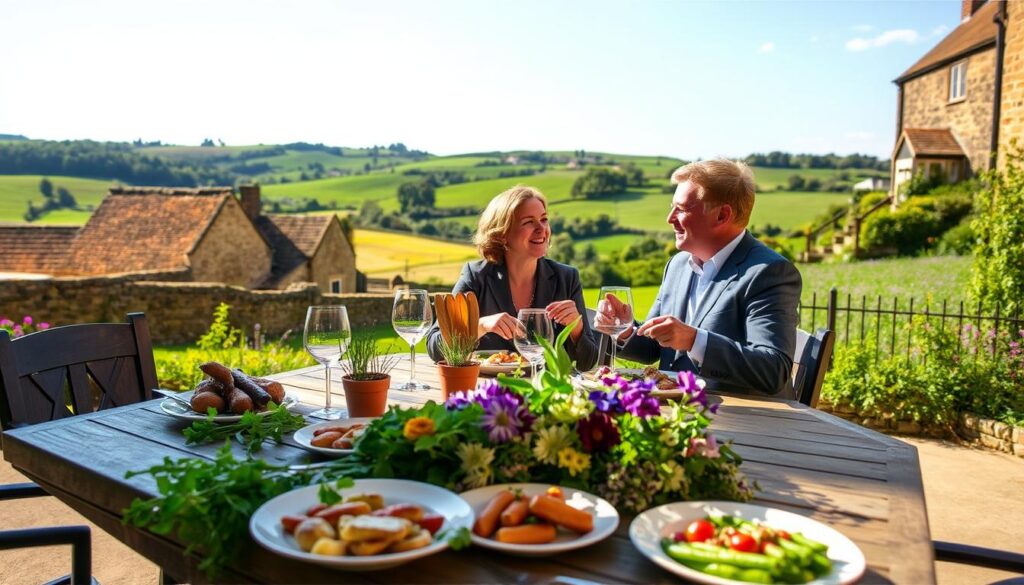
Whether you’re looking for a romantic dinner by the river, a special occasion at a hilltop venue, or a cozy meal by the fireside, the Cotswolds has something to offer. The region’s diverse dining settings ensure that every meal is a memorable experience.
Creating Your Perfect Cotswolds Food Itinerary
Planning a food-focused trip to the Cotswolds requires a thoughtful approach to experiencing the region’s unique culinary delights. To create your perfect Cotswolds food itinerary, start by exploring the local specialties that define the region’s cuisine.
Visit the Cotswolds’ renowned farmers’ markets, such as Stroud Farmers’ Market, to sample the best of local produce, including artisanal cheeses like Single Gloucester and Double Gloucester. Be sure to stop by historic tea rooms, where you can indulge in traditional cream teas and afternoon tea services.
For a truly immersive experience, consider guided food tours or cooking classes that showcase traditional Cotswolds recipes and contemporary techniques. Pair these experiences with visits to local farm shops, like Daylesford Organic, to discover the region’s finest artisanal products.
By combining these elements, you can craft a personalized food itinerary that highlights the best of Cotswolds cuisine and local specialties, ensuring a memorable and delicious trip.
